


Overview Of Non-Judicial Foreclosure Process

Non-Judicial Foreclosure Process is generally shorter and involves less steps than a Judicial Foreclosure Process, as it bypasses the courts and the lawsuits. In states that allow the usage of non-judicial process to foreclose on mortgage and deed of trust loans, the foreclosing lender invokes the Power Of Sale clause when a borrower defaults on mortgage payments. Deed of trusts typically allow for non-judicial foreclosure sale, but not always.

Power of Sale covenant present in mortgage or deed of trust gives the lender or the trustee the right to foreclose the loan in default by filing a notice of default with the county or public recorder’s office. Once the notice is filed, the lender or trustee is required to follow statutory steps related to advertising the auction/sale of the property. Most of the non-judicial foreclosure states provide for redemption of the foreclosed homes under most circumstances. This makes up for the short and expedited pre-foreclosure process.

Steps involved in the non-judicial foreclosure of a residential property :

  1. Borrower is at least 30-90 days (2-3 months) behind on their mortgage payments.
  2. Trustee/Lender files a notice of default with the county.
  3. The pubic sale date is set.
  4. The date of auction/sale is published and advertised as required.
  5. In case of a satisfactory bid, the property is sold to the highest bidder. Otherwise, the lender may choose to take back the property and hold it as REO.
  6. Deficiency judgment may be entered against the borrower if the property is sold for less than the total outstanding balance.
  7. Depending on the redemption rights, the borrower can get the property back by paying all the owned monies.
  8. A trustee’s deed is given to the highest bidder after the stuatory redemption duration has lapsed.

Overview Of Judicial Foreclosure Process

The judicial foreclosure process outlined here is a broad overview of the general steps and procedures typically involved in various states. This steps involved are usually the same, but the duration and the exact manner in which each procedure is carried out differs from one state to another. It is better to review the respective foreclosures laws and statutes of each state to get an in depth view of the foreclosure process involved.

Judicial foreclosure process is carried out through the courts system. In states that allow judicial foreclosures process on mortgage and deed of trust loans, the lender files a lawsuit to foreclose against the borrower and other lien holders who held any interest in the property prior to the lender recording mortgage or deed of trust. All the interested parties, primarily the borrower (mortgagor or trustor) are given notice of the pending lawsuit.

In addition, a lis pendens (suit-pending) is immediately filed with the local county to notify the general public about the pending foreclosure lawsuit filed against the property owner. A time period of atleast 20 days is typically given to the property owner and other concerned parties to respond formally to the filed foreclosure lawsuit. In the event of non reply, the presiding judge by default rules against the defendants and orders the sale of property at a public action to satisfy the lender’s claim, according to the state’s procedure.

Steps involved in the judicial foreclosure of a residential property :

  1. Borrower is at least 30-90 days (2-3 months) behind on their mortgage payments.
  2. In the court with the jurisdiction, the lien-holder files a lawsuit to foreclose on the property whose payments are in default.
  3. All the parties named in the lawsuit are formally notified of the filed foreclosure lawsuit. They are given due time to formally respond to the pending lawsuit
  4. A Lis Pendens that notifies the general public of the pending foreclosure lawsuit against the property owner is filed.
  5. If the Borrower responds to the lawsuit, then a hearing date is set.
  6. At the hearing date, if there is any merit to the borrower’s argument, the judge may decide to dismiss/delay the lawsuit or may order the loan to be foreclosed. If foreclosure judgment is granted, the property will be scheduled for foreclosure auction sale.
  7. The foreclosure auction sale is advertised. Local newspapers carry these advertisements on predetermined dates.
  8. At the foreclosure auction, the property will be auctioned off to the highest bidder if it meets lender’s expectaions. If the bid is not sufficient, the lender may choose to take back the property. Such unsold foreclosure properties that are retained by the lender are called REOs (Real Estate Owned).
  9. If the bid accepted by the lender is below the foreclosure judgment amount, the lender can approach the court to get a deficiency judgment issued against the borrower.
  10. If the state allows for redemption rights, the borrower may payoff the amount owed to the lender and claim the property back within the allowed redemption period.
  11. Once the statutory redemption period expires, the highest bidder at the auction will be given the sheriff’s deed or certificate to give complete legal possession of the property.

Alabama (AL) Foreclosure Laws

Alabama Foreclosure Laws allow for both judicial and non-judicial forms of foreclosure process. Either Mortgage or Deed of Trust can be used as legal instruments to secure debt. Foreclosing on a property through the judicial process is quite rare in Alabama as Deed of Trust instrument is widely preferred and adopted.

In Alabama, there isn’t much significance to the type of the legal instrument used, as either of them allow a lender to pursue a non-judicial process even in the absence of a Power of Sale clause. These laws are quite favorable to the lien holders/lenders/banks as they allow for an expedited pre-foreclosure process compared to several other states. The entire process typically lasts from 30 - 90 days.

Alabama Foreclosure Law Summary
Time line: 30 - 90 days
Redemption Period: Up to 12 Months from the date of sale
Deficiency Judgments: Allowed
Judicial Process: Yes, but very rare
Non-Judicial Process: Yes, commonly used
Legal Security Instruments:
Both Mortgage and Deed of Trust

The following are direct links to the laws that govern Alabama Foreclosures:

Article 1: Powers Contained in Mortgages.

  • Section 35-10-1 Power of sale constitutes part of security; by whom executed; effect of conveyance; index of foreclosure deeds.
  • Section 35-10-2 Sale under power where instrument silent as to place or terms of sale.
  • Section 35-10-3 Foreclosure when instrument contains no power of sale.
  • Section 35-10-4 Sale of lands situated in two or more counties.
  • Section 35-10-5 Foreclosure deed conveys legal title.
  • Section 35-10-6 Additional satisfaction permitted under continuing power of sale.
  • Section 35-10-7 Sale to be held in county where property situated.
  • Section 35-10-8 How notice of sale given.
  • Section 35-10-9 Sales contrary to article null and void.
  • Section 35-10-10 Sections 35-10-7 through 35-10-9 not applicable to mortgages or deeds of trust executed before September 29, 1923.

Article 1A: Foreclosure by Power of Sale for Mortgages Executed After December 31, 1988.

Article 2: Satisfaction of Mortgage Liens.

Article 3: Deeds in Lieu of Foreclosure.

Other Law Resources:


Countrywide Sends Another E-Mail …Blah…Blah

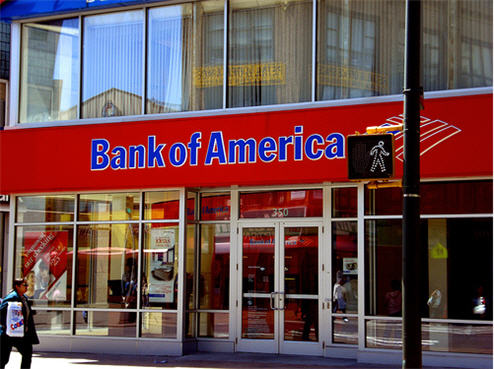
Countrywide has just sent out this email to its business partners (Mortgage Brokers..etc) about their today’s announced merger with Bank of America. There isn’t anything new in this email that hasn’t already been covered by this morning’s news reports.

Dear Valued Business Partner:

Over the last four decades, Countrywide has enabled approximately 20 million borrowers to achieve the dream of homeownership. In order to enhance what we have worked so hard to build over the years, Countrywide has taken a decisive step to ensure our continued industry leadership. Today, we announced that Bank of America, which has been an important financial partner of Countrywide for many years, will be acquiring our Company. BofA is one of the largest and most influential financial institutions in the United States and internationally, and we firmly believe that the combination of Countrywide and BofA will create the most powerful mortgage franchise in the world.

As you will see in the below press release announcing this transaction, BofA has announced that it plans to operate Countrywide separately under the Countrywide brand, with integration occurring no sooner than 2009. We are confident that both our servicing and origination businesses, as well as other aspects of our operations will be substantially enhanced as a result of this transaction. Notable, in statements from BofA today, is the mention of the Wholesale distribution network.

Bank of America Agrees to Purchase Countrywide Financial Corp. (PDF of Press Release)

Please know that Countrywide deeply appreciates our partnership with you — past, present and future.

For nearly 40 years, we have focused on real estate finance and have helped millions of Americans realize the dream of homeownership. Thank you for continuing to choose Countrywide. Your partnership is invaluable, and we look forward to continuing to play a critical role in your long-term growth and success.

Todd A. Dal Porto
Senior Managing Director and President
Countrywide®, America’s Wholesale Lender®

Next Page »